Choosing and booking
Kyoto koto concert: how to choose
Townhouse or bathhouse, what the ticket includes, how the hour runs and who each room suits, checked against the organiser's own pages.
Reserve a seat at the concert ↗Quick answer
Book the townhouse concert for the smallest room, close fingerwork and the option of trying the koto yourself afterwards. Book the bathhouse concert for a larger hall, a duet and the ring of tiled walls, but it runs only on selected days, usually Mondays. Both include spoken commentary in Japanese and English, questions for the musicians and time for photos. The booking calendar shows which room is open on your date.
The two rooms side by side
| Townhouse | Bathhouse | |
|---|---|---|
| Room | Traditional Kyoto home | Former public bath |
| Audience | Fewer than a dozen | Around thirty |
| Players | Solo sets, koto and shamisen | Koto duet with a second instrument |
| Hands-on koto | Optional, townhouse only | Not offered |
| When | Most days | Selected Mondays |
| Best for | Close listening, a lesson | Atmosphere, a bigger sound |
What one ticket gets you
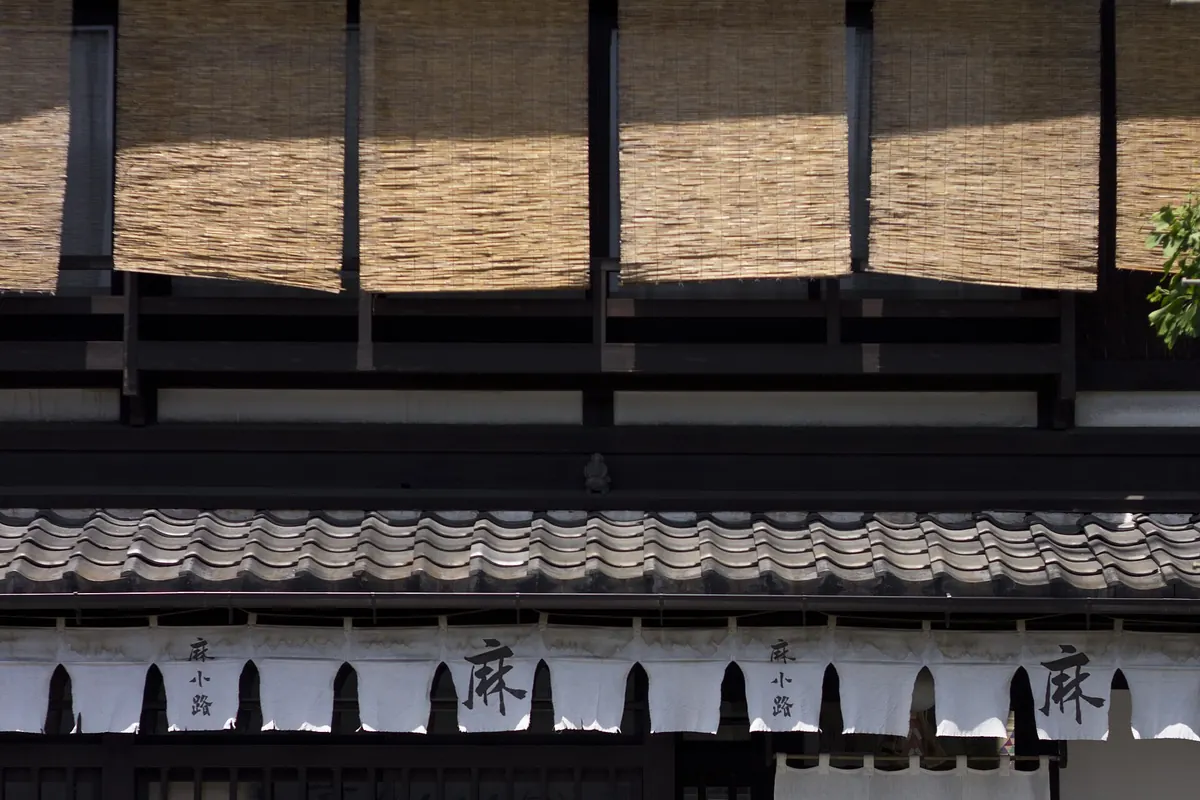
A ticket is a seat at one live concert of koto and shamisen music by professional players, in one of two Kyoto rooms. You pick the room when you pick the date, and your meeting point follows from that choice. The hour includes short commentary in Japanese and English, a question-and-answer session with the musicians and time to photograph them. Seating is on cushions or chairs in the townhouse and in rows in the bathhouse. Nothing else is bundled, so plan your own dinner and your own way there. A group booking is simply several seats on the same date, so everyone in your party chooses the same room.
- Included: the concert, the commentary, the questions, the photo time, your seat
- Optional: a hands-on koto lesson, townhouse only
- Not included: transport to the venue, food and drink
The townhouse concert
The townhouse is a traditional Kyoto home with a warm, living-room feel, where a single musician plays solo sets on the koto and the shamisen. The room holds fewer than a dozen guests, so you can follow every pluck and slide at close range. Expect four or five pieces, a mix of classical and contemporary. The organiser calls this venue Gen Home Saiin, after the Saiin district of Kyoto, and the concert runs almost every day, which makes it the easy option to fit around other plans.
The bathhouse concert
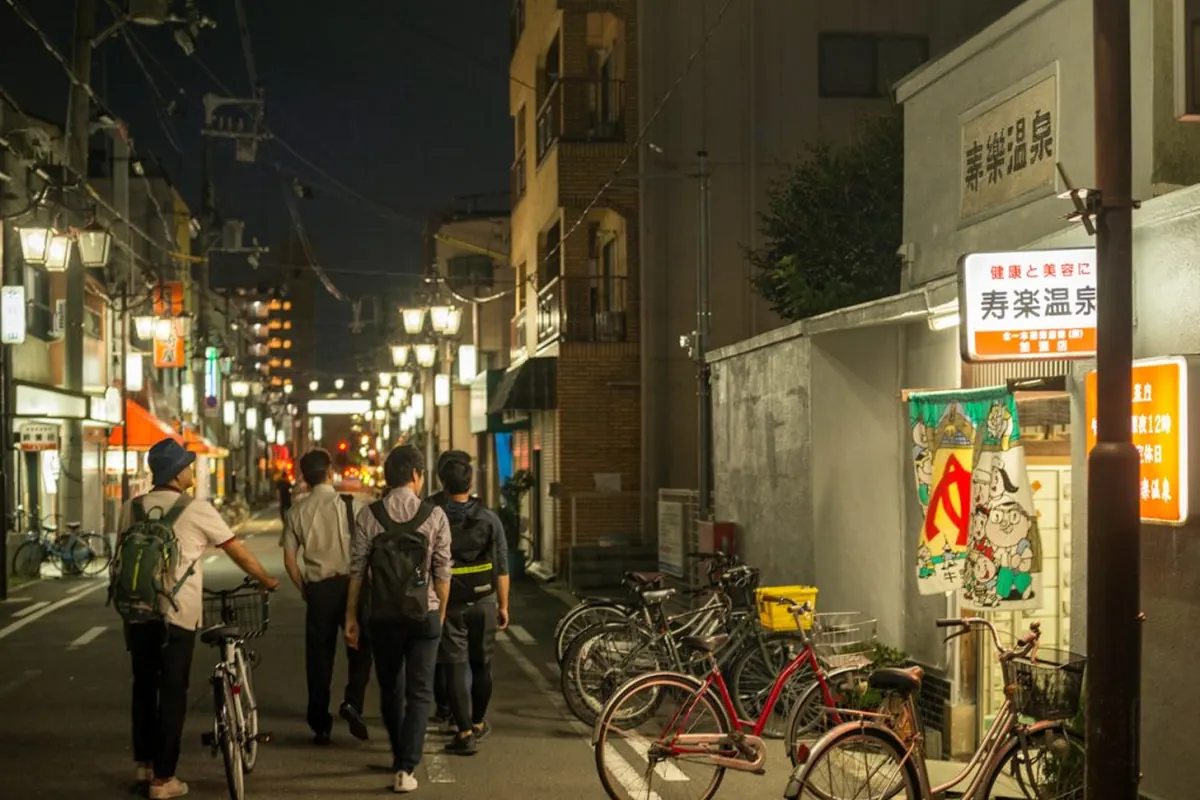
The bathhouse is a former public bath, a type of communal bathhouse called a sentō, whose numbers have fallen as more homes gained their own baths. Today it is a hall for around thirty guests. Tiled walls give the room a long, natural reverberation, and the koto is paired with a second instrument. Gen runs it at Kujo-yu, described as close to Kyoto Station. You sit and listen; there is no bathing, and the bath facilities are not part of the visit. Because the hall holds around thirty, the draw is the sound rather than a close view of the fingers, so it suits listeners who care more about acoustics than about technique.
Read next: Machiya and sentō: the concert rooms
Who plays beside the koto
In the bathhouse hall the koto is joined by another instrument, and which one depends on the day: the shamisen, the shakuhachi, the taishōgoto, a flute or even a guitar. The shakuhachi is a bamboo flute with a breathy, meditative tone. The taishōgoto is a keyed instrument whose buttons change the pitch of its metal strings, and it is named after the Taishō period. A duet gives you contrast that a solo set cannot, which is the main reason to pick the bathhouse once you have heard a koto before.
How to decide between them
Both rooms deliver the same core: Japanese instruments explained and then played by people who do it for a living. The difference is intimacy against resonance. If you have never heard a koto, the townhouse lets you watch the right hand, the picks and the movable bridges from a metre or two away. If you already know the sound and want more variety, the bathhouse duet offers it. If neither suits your dates, the date decides for you. Think about who is coming. A solo traveller or a couple often prefers the townhouse's close scale, while a group of friends may enjoy the bathhouse's more social feel. Anyone unsure about sitting on a cushion can note that the townhouse also offers chairs, and the bathhouse seats guests in rows.
- Choose the townhouse for close fingerwork and the lesson option
- Choose the bathhouse for a duet and a bigger acoustic
- Choose by date if only one room is open on your day
How the hour runs
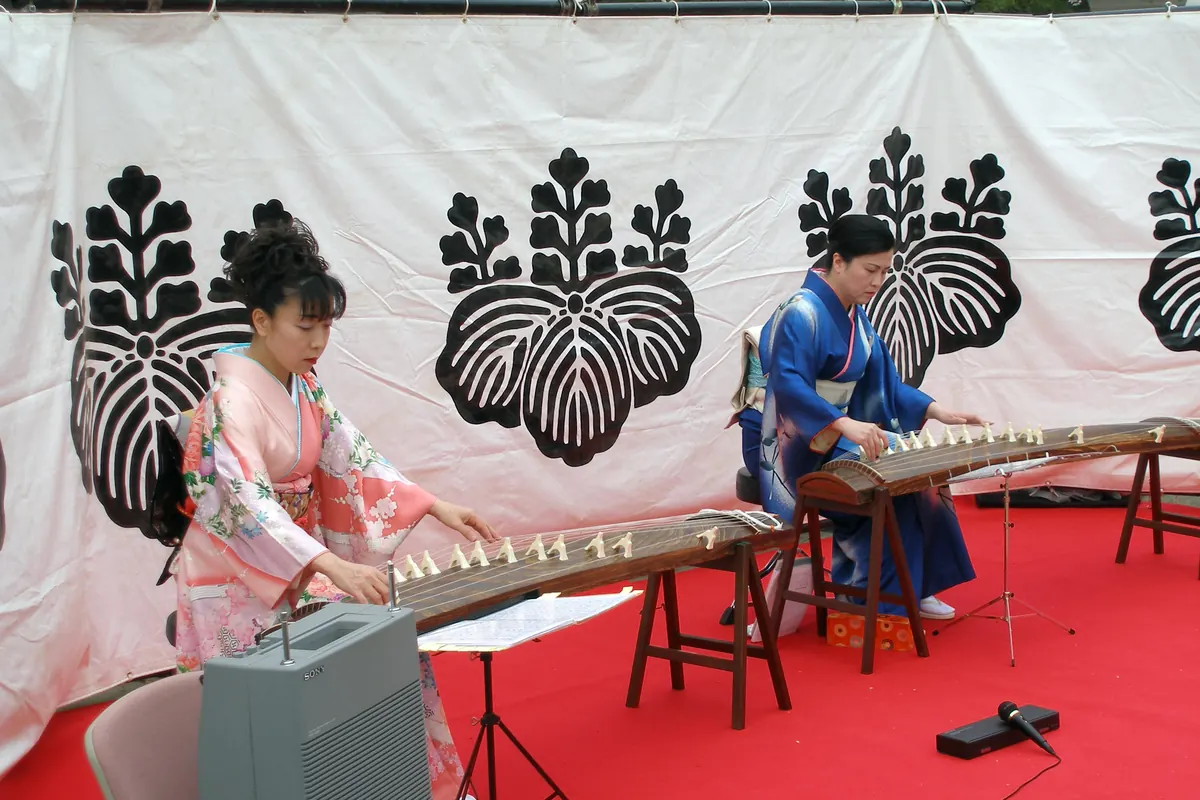
The concert follows five steps. You check in and take your seat, with a few words on house manners. The musician then introduces the instruments: how they are played, what the picks and bridges do, and how the unusual notation works. The concert itself comes next, followed by questions and photos. Allow about an hour for the concert and talk together. The optional lesson, townhouse only, adds time on top, so leave a longer gap in your day if you add it.
Read next: What is a koto? The 13-string zither
The hands-on koto lesson
After the townhouse concert you can add a short lesson on the koto itself. It is built for beginners: a guided first try at basic technique and a short phrase, on instruments cleaned between guests. You need no background and no special sense of rhythm. The lesson belongs to the townhouse option only. The bathhouse concert has no hands-on part, so if trying the instrument is the point of your visit, book the townhouse and choose the lesson when you reserve.
The music and the language
Programmes are chosen by the performer and change with the season and with who is playing, so nobody can promise you a particular piece. Sample titles include Kajimakura, Chidori no Kyoku and Kaede no Hana, and sets move between classical works and contemporary ones. Commentary is bilingual, in Japanese and English. The organiser says the musicians are not fluent in conversational English and that an assistant helps translate, so keep questions short and clear and you will get more from the question time. A good question for the end is how the player chose the set, because each performer curates their own programme to show off a personal style.
Dates, meeting point and cancellation
Townhouse concerts are on almost every day. The bathhouse hall is open only now and then, on selected Mondays, so work out which room your dates allow before you plan other things around it. The ticket has two meeting points, one for each room, and your confirmation shows the right one. Through GetYourGuide you may hold a seat without paying now, and a cancellation made a day ahead is refunded in full. The organiser's own direct terms differ, so rely on the terms on the booking page. Because the two rooms run on different calendars, pick your day first, see which room is open and book that room, rather than fixing on a room and hunting for a date.
Booking for a group
Small groups and private bookings are available. The organiser's private option is held at the townhouse for up to nine guests, and the bathhouse hall does not take private bookings. If you are four or five people travelling together, the townhouse feels like a private recital even without a private booking. For a larger party, the bathhouse hall can seat more, but it is open on fewer dates, so fix the date first and then choose the room.
Who this isn't for
Babies under one year are not suitable for this ticket. If you want a long formal recital with an interval, this is not it: the concert part is about an hour, including talk. Anyone who needs transfers, a meal or drinks with the music should arrange them separately, because none is included. And if you expect a loud, theatrical show, look at the drumming shows elsewhere in Kyoto; this is quiet music in small rooms.
Frequently asked questions
Do I need to know anything about Japanese music?
No. The musicians introduce the koto and the shamisen before they play, and the organiser expects no prior knowledge from guests.
How long does the concert last?
About an hour including the talk and the questions. The optional koto lesson, available at the townhouse only, adds further time, so the booking page shows the longer range.
Can I take photos?
Yes. Photo time with the musicians is part of the hour, and the organiser welcomes photos without flash unless the staff ask you to stop. Ask before filming during a piece.
Is the bathhouse concert held every day?
No. It runs on selected days, usually Mondays, and the calendar shows the next dates. The townhouse concert is the one that runs almost daily.
Can children come along?
Babies under one year are not suitable. Older children are not excluded, but both rooms are quiet and close, so judge whether your child can sit still and listen for an hour.
What if my plans change?
Cancel at least a day ahead and the full fare comes back, provided you booked through GetYourGuide. The organiser's own direct terms differ, so read the terms on the booking page.
Sources